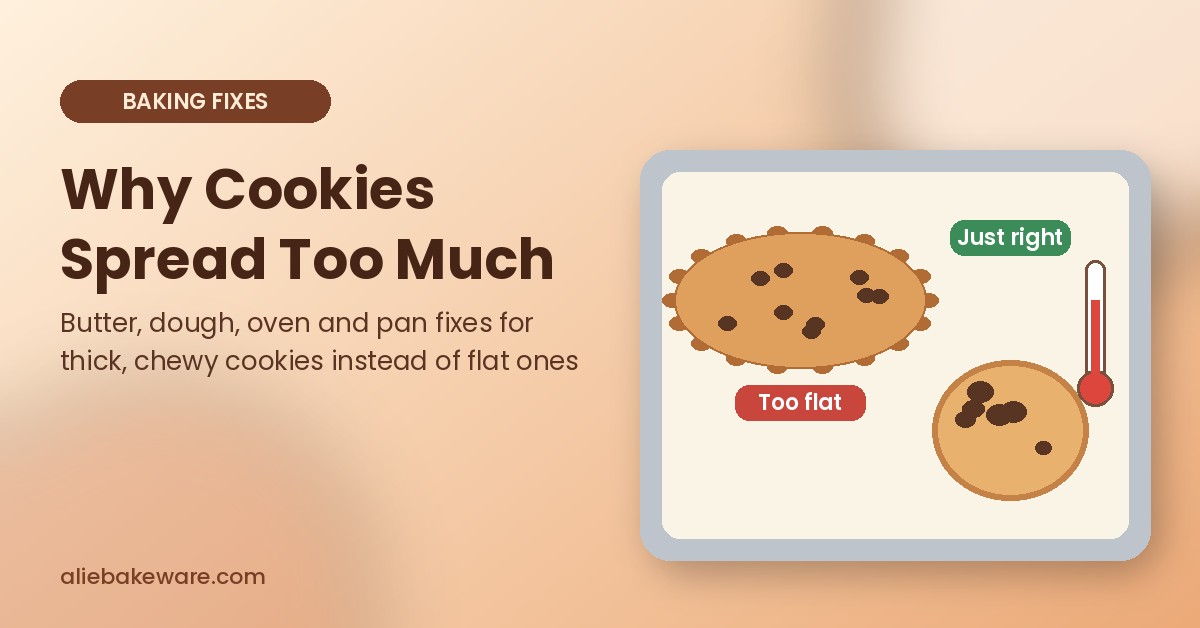
You scooped neat little balls of dough, slid the tray into the oven, and twelve minutes later pulled out one giant, lacy sheet with brown edges and a pale middle. Annoying, and also very common. The good news is that cookie spread is not random. It’s a race between two things happening at once in the oven: fat melting and dough setting. When the fat wins, the cookie runs outward before the flour and eggs have firmed up enough to hold it in place.
Once you see it that way, figuring out why cookies spread gets a lot easier. Almost every cause on the list below either makes the fat melt sooner or makes the structure set later. Fix the one that applies to you and the next batch should come out thick, chewy and round.
What actually happens to cookie dough in the oven
For the first few minutes of baking, the dough warms from the outside in. Butter softens and then melts at roughly body temperature, so it turns liquid early. Sugar dissolves into the water from the butter and eggs and becomes a syrup. Both of those make the dough looser, and gravity pulls it outward.
Meanwhile, the proteins in the egg and flour are slowly heating toward the point where they set, and starch starts to swell. Leaveners release gas and puff the dough up a bit. At some point, the edges firm up and the cookie stops moving. Whatever shape it has at that moment is the shape you get.
So the whole game is timing. Anything that buys the structure a minute or two, or delays the butter melting, gives you a thicker cookie.
The most common reasons cookies spread too much
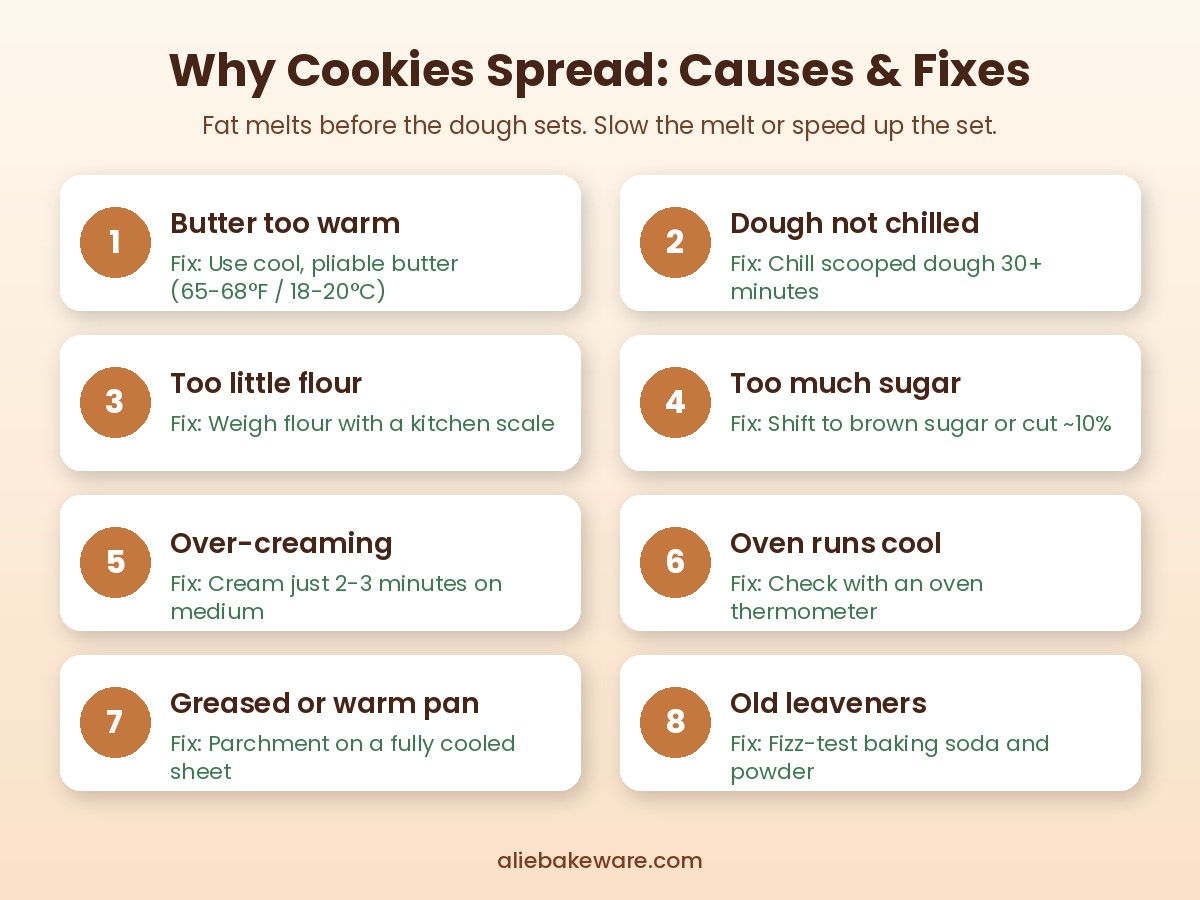
1. Your butter was too warm
This is the big one. “Room temperature” in a recipe means cool and pliable, about 65–68°F (18–20°C), not soft and shiny. If you press it with a finger, it should dent but push back a little. Butter that sat next to a warm stove, or got a “quick” spin in the microwave, starts out half melted, and the dough has almost no head start in the oven.
Fix: Take butter out of the fridge 30–45 minutes before baking, not three hours. On a hot day, cut it into cubes and check it after 15 minutes. If you overshoot, put it back in the fridge for ten minutes before creaming.
2. You skipped chilling the dough
Chilling does two jobs. It firms the fat back up, so it melts later in the oven. It also gives the flour time to soak up liquid, which thickens the dough. Even 30 minutes in the fridge makes a visible difference, and an overnight rest helps flavor too.
Fix: Scoop the dough into balls first, then chill the balls on a tray. They hold their shape better than a big chilled block that you have to hack apart later. Bake straight from the fridge.
3. Not enough flour (usually from measuring by volume)
A cup of flour can weigh anywhere from about 120 g to over 150 g depending on whether you spoon it in or scoop it straight from the bag. Spooning lightly often gives you less flour than the recipe writer used, and less flour means less structure to stop the spread. Recipes vary, though, so the real problem is inconsistency.
Fix: Use a kitchen scale and follow the gram weights in the recipe. If your recipe only lists cups, fluff the flour, spoon it into the cup and level it off. If your cookies still spread, add one to two tablespoons more flour per batch and see how that changes things.
4. Too much sugar, or the wrong kind
Sugar melts into syrup in the oven, so a high-sugar dough is a runny dough. White sugar causes more spread than brown sugar, and swapping honey or maple syrup for granulated sugar adds even more liquid. That’s why some cookies with lots of sugar bake up thin and crisp, which is perfect if you want that and frustrating if you don’t.
Fix: For a thicker cookie, shift part of the white sugar to brown sugar, or reduce the total sugar by about 10 percent. Don’t cut much more than that, or you’ll lose browning and chew.
5. Over-creaming the butter and sugar
Creaming should take a couple of minutes on medium speed, just until the mixture is lighter in color and fluffy. Beat it for eight or ten minutes and two things can happen: the butter warms up from the friction, and you whip in a lot of air that collapses in the oven. Either way, the cookie slumps.
Fix: Set a timer for 2–3 minutes. With a stand mixer, keep it on medium, not high.
6. Your oven runs cool
Most home ovens are off by at least a few degrees, and many beep “ready” well before the inside walls are fully heated. In a cool oven, the butter melts at the usual pace but the edges take longer to set, so the dough keeps running. An oven at 325°F when you think it’s at 350°F can make a noticeable difference.
Fix: Buy an inexpensive oven thermometer, hang it in the middle of the rack and let the oven preheat for a full 20 minutes. Then bake one test cookie before committing the whole tray.
7. Old baking soda or baking powder
Leaveners give cookies some lift, which pushes the dough up instead of only out. Baking soda also raises the pH of the dough, which changes how fast it sets and browns. If your box has been open for a year, it might be doing less than you think.
Fix: Test baking soda by stirring a pinch into a spoonful of vinegar. Test baking powder in hot water. No vigorous fizz means it’s time for a new box.
8. Larger eggs, or extra liquid
A large egg weighs about 50 g out of the shell. If you use extra-large or jumbo eggs in a recipe written for large ones, you add more water, and a wetter dough spreads. The same goes for an extra splash of milk or vanilla.
Fix: Crack the eggs into a bowl, whisk and weigh them. Use only what the recipe needs.
Your bakeware matters more than you’d think
The pan and what you put on it change how quickly heat reaches the bottom of the dough, and how much the dough can grip.
- Greased pans cause more spread. A layer of butter or spray gives the dough a slippery surface to slide across. Unless the recipe specifically asks for it, skip the grease and use parchment paper or a silicone baking mat instead.
- Warm pans make a big difference. If you scoop the second batch onto a tray that just came out of the oven, the butter starts melting before the dough even goes in. Let pans cool completely, or rotate between two or three trays.
- Dark pans brown faster, light pans bake more evenly. A dark nonstick sheet absorbs more heat and can over-brown the bottoms. A light-colored, heavy-gauge aluminum sheet is the most forgiving choice for cookies. If you’re weighing up what to buy, our guide to choosing bakeware materials: aluminum vs steel vs glass vs ceramic walks through how each one handles heat.
- Thin, warped sheets heat unevenly. Cookies on the hot spots spread and burn while the rest stay pale.
Quick fixes for flat cookies (a troubleshooting order)
If you’re not sure which of the causes above is yours, work through them in this order. The first few are easy and cost nothing, so start there:
- Check the butter temperature before you cream. Cool and pliable, never glossy.
- Chill the scooped dough for at least 30 minutes.
- Bake on parchment, on a cool pan, with no grease.
- Put a thermometer in the oven and confirm the real temperature.
- Weigh the flour and sugar instead of using cups.
- Replace old leaveners.
- Only then start changing the recipe itself, such as more flour, less sugar or a different fat.
Change one thing at a time. Change three at once and you’ll never know which one actually helped.
Recipe tweaks for thicker cookies
Sometimes the recipe itself is built to spread, and that’s fine for crisp, lacy cookies. If you want something chunkier, these adjustments work well:
Use part shortening
Shortening melts at a higher temperature than butter and contains no water, so it holds its shape longer in the oven. Swapping a quarter to half of the butter for shortening thickens the cookie a lot, though you give up some buttery flavor.
Try browned butter
Browning butter cooks off most of its water. Once cooled and firmed back up, it adds a toasty, nutty flavor and slightly less spread. Make a little extra, since you lose some weight to evaporation.
Add a bit of bread flour
Bread flour has more protein than all-purpose flour, which gives the dough more structure and a chewier bite. Replacing about a quarter of the flour is a good starting point.
For a deeper look at how each ingredient changes texture, the side-by-side tests in Serious Eats’ Food Lab chocolate chip cookie experiments are worth reading. King Arthur Baking also has a helpful rundown of why cookies spread, including how egg size and butter temperature affect the dough.
Frequently asked questions
Why did my cookies spread when I used the same recipe as last time?
Usually it’s the conditions, not the recipe. A warmer kitchen, softer butter, a different brand of flour, bigger eggs or a pan still warm from the last batch can all change the result. Check those before you change the recipe.
Can I fix cookie dough that is already spreading?
Yes. Stop baking, put the rest of the dough in the fridge for 30–60 minutes, and work in a tablespoon or two of flour if it feels soft and greasy. As soon as the trays come out of the oven, you can also nudge the edges of the cookies inward with a round cutter or the rim of a glass to make them rounder.
The short version
Cookies spread when the fat melts before the dough sets. Keep the butter cool, chill the dough, measure carefully, bake on parchment in a properly heated oven, and most flat-cookie problems go away. If your cakes have been giving you trouble too, a lot of the same thinking applies, so take a look at why cakes sink in the middle and how to fix them.