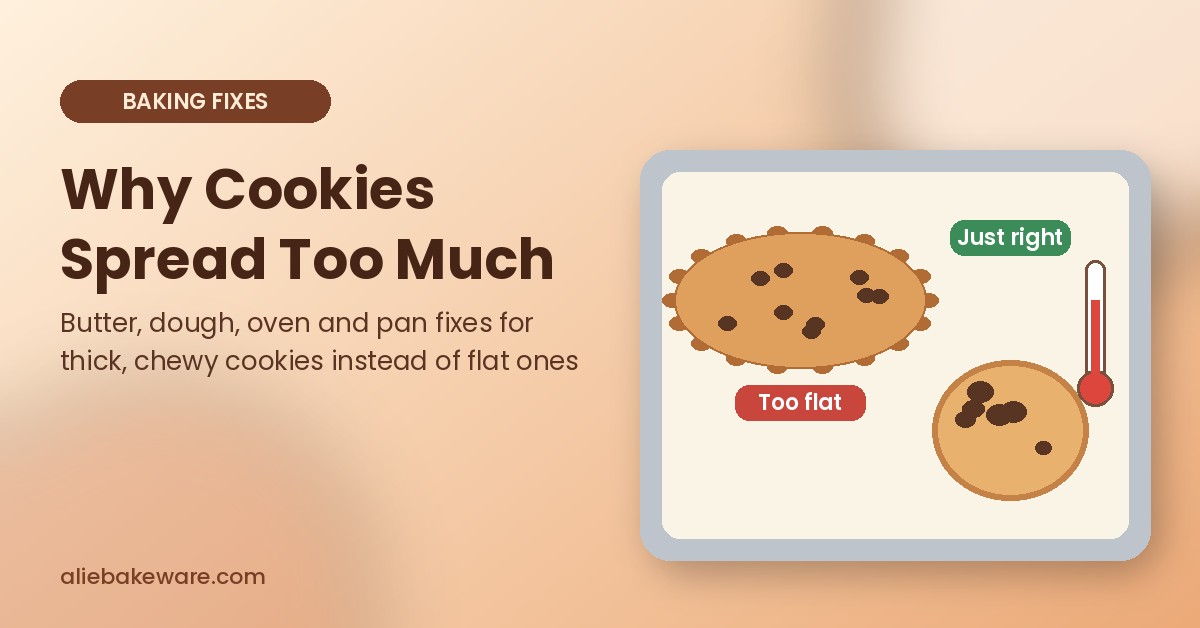
Two trays of the same cookie dough, same oven, same twelve minutes. One comes out with pale, soft bottoms. The other has a ring of dark, almost scorched edges around a center that still looks underdone. Most people blame the recipe or the oven. Very often the real difference is the metal under the dough.
If you have been trying to work out the best baking sheet material, it helps to stop thinking about brands and start thinking about how heat actually moves through a pan. Cast iron, carbon steel and stainless steel all look like sturdy, serious options on a store shelf, but they behave very differently once the oven door closes. This guide walks through what each one does well, where each one struggles, and how to pick the right one for the food you actually make.
How a baking sheet moves heat
A baking sheet has one job: take heat from the oven air and the rack below and pass it into the food, ideally evenly across the whole surface. Three properties decide how well it does that.
Conductivity
Conductivity is how quickly heat spreads sideways through the metal. A highly conductive sheet carries heat from a hot corner to a cooler middle before one spot can race ahead. Low conductivity is where hot spots come from. Among the three metals here, cast iron and carbon steel sit in a similar middle range, while plain stainless steel is a poor conductor, roughly a third or less of the other two.
Heat capacity and thickness
Heat capacity is how much energy the pan stores. A thick, heavy pan soaks up a lot of heat, takes longer to warm up, and then keeps pumping that heat into the food even when you open the oven door. A thin pan warms up fast and also cools fast. Thickness matters as much as the metal itself: a 1 mm steel sheet and a 5 mm cast iron slab are different tools even before you consider what they are made of.
Surface color and finish
Dark, matte surfaces absorb radiant heat from the oven walls and elements more readily than shiny ones. That is why a well-seasoned black pan browns the bottom of a cookie faster than a bright, polished tray, even at the same oven setting.
With those three ideas in mind, the differences between the metals start to make sense. For a wider look that also covers aluminum, glass and ceramic, our guide to choosing bakeware materials is a good companion to this one.
Cast iron baking sheets and pans: slow to start, hard to stop
Cast iron baking sheets are usually thick and heavy, often several millimeters of solid metal. The Clemson University Home & Garden Information Center describes cast iron as strong, inexpensive and an even conductor of heat, which matches what most bakers notice once the pan is properly hot.
The key phrase is “properly hot.” Because cast iron stores so much energy, it takes a long time to come up to temperature. Put a cold cast iron sheet into a 220°C (425°F) oven and it may need 30 to 45 minutes before the whole slab is truly at oven temperature. Slide food onto it too early and you get uneven results, with the edges ahead of the middle.
Where cast iron shines
- Pizza and flatbreads. A fully preheated cast iron surface dumps heat into dough the instant it lands, giving a crisp, blistered base that a thin tray cannot match.
- Roasting dense vegetables. Potatoes, squash and root vegetables get a deeper sear on the side touching the pan.
- Bread with a crust. Rustic loaves and focaccia benefit from that steady bottom heat.
Where it struggles
Delicate cookies, sponge layers and anything that needs a gentle, even bake can scorch underneath on cast iron. It is also heavy enough that pulling a loaded, 230°C sheet from a low rack is a genuine safety concern. And it needs care: plain cast iron must be seasoned and kept dry to prevent rust. If you already own a skillet, the routine in our post on how to season and care for a cast iron skillet applies to cast iron baking pans too.
Carbon steel baking sheets: the responsive middle ground
Carbon steel is mostly iron with a small amount of carbon, rolled into sheets rather than cast in a mold. That makes it much thinner and lighter than cast iron while keeping similar conductivity. In the oven, a carbon steel sheet warms up within a few minutes and spreads that heat reasonably well across its surface.
Because it is thin, carbon steel stores far less heat. That is a strength for most everyday baking. Cookies and sheet-pan dinners cook through without the bottoms racing ahead, and the pan cools quickly enough to reload for a second batch without a long wait.
Seasoning changes the picture
Raw carbon steel rusts, so most sheets come either pre-seasoned or with instructions to season before use. Over time the surface darkens to brown or black. That darker color absorbs more radiant heat, so a well-used carbon steel sheet will brown faster than it did on day one. It is worth checking your first few batches a couple of minutes early after a fresh round of seasoning.
Best uses for carbon steel
- Cookies, scones and biscuits where you want golden, not dark, bottoms.
- Roasted vegetables and sheet-pan meals that need good browning without a long preheat.
- Pizza steels, which are simply thick carbon steel plates. At around 6 to 10 mm, they behave much more like cast iron: long preheat, huge stored heat, excellent crust.
Avoid leaving acidic food such as tomato sauce or citrus marinade sitting on bare carbon steel for long. Acids can strip the seasoning and leave a metallic taste.
Stainless steel baking sheets: durable, but watch the heat
Stainless steel is steel with added chromium, and usually nickel, which makes it resistant to rust and staining. It will not react with acidic foods, it can go in the dishwasher, and it keeps looking good for years. As a material for an oven tray, though, it has one big weakness: it is a poor conductor of heat.
A thin, single-layer stainless sheet tends to develop hot spots right above the oven’s heat source and cooler areas elsewhere. Shiny stainless also reflects radiant heat, so it can bake more slowly overall while still scorching in patches. Clemson’s fact sheet makes the same point, noting that stainless cookware does not conduct heat evenly and is therefore often built with copper or aluminum.
Clad stainless is a different animal
Many higher-end stainless sheets are “clad” or “tri-ply”: a layer of aluminum sandwiched between two thin layers of stainless. The aluminum core does the heat spreading, while the stainless outside gives you durability and an easy-clean, non-reactive surface. If you want stainless for its toughness, clad construction is the version worth paying for.
Making plain stainless work
- Line it with parchment paper to soften direct contact heat under cookies and pastry.
- Rotate the sheet halfway through baking.
- Use it for jobs where perfect evenness matters less: toasting nuts, roasting bones for stock, holding prepped ingredients, or catching drips under a pie.
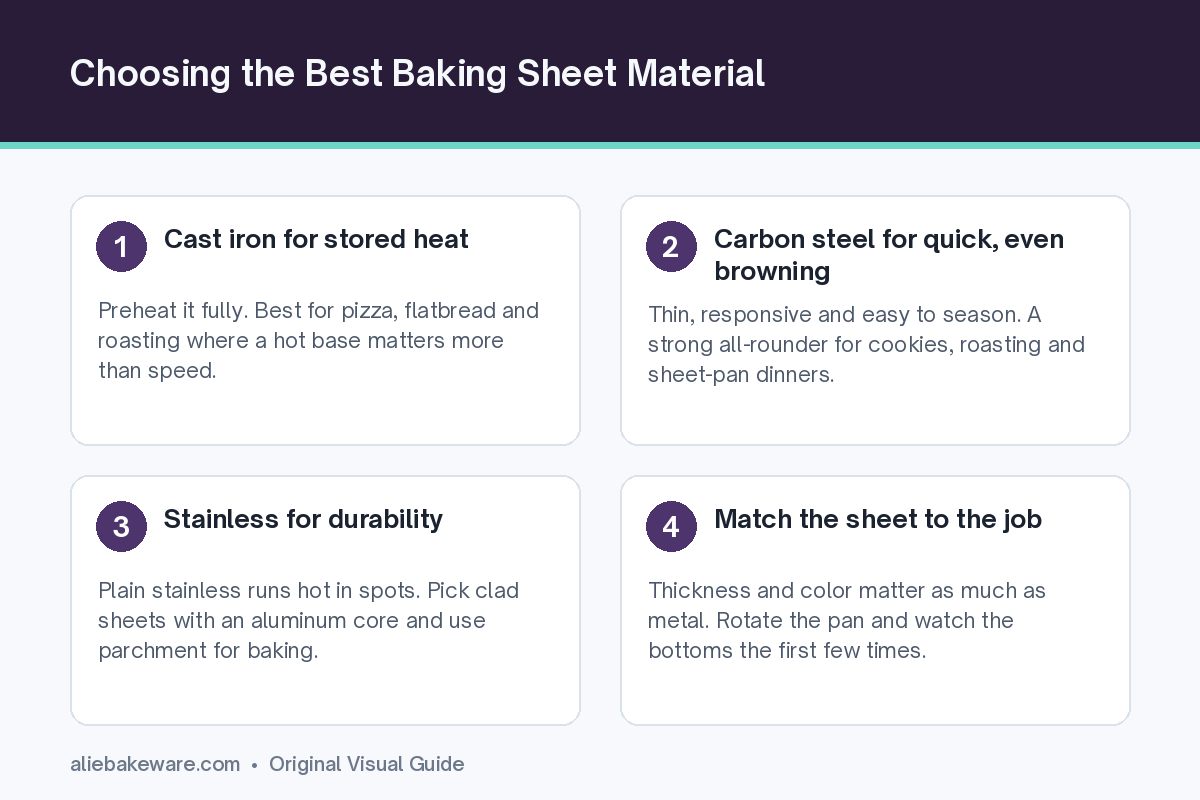
So what is the best baking sheet material?
There is no single winner, which is honestly the most useful answer. The best baking sheet material depends on what you bake most often.
Quick comparison
- Cast iron: slow to heat, holds heat superbly, heavy, needs seasoning. Best for pizza, flatbread, crusty bread and hard roasting.
- Carbon steel: heats quickly, browns well, light, needs seasoning. Best all-rounder for cookies, roasting and weeknight sheet-pan meals.
- Plain stainless: uneven heat, very durable, no seasoning, dishwasher friendly. Best for utility jobs and acidic foods, or baking with parchment.
- Clad stainless: even heat from the aluminum core, durable, pricier. Best if you want one low-maintenance sheet that lasts decades.
If you only want to own one, a medium-weight carbon steel sheet covers the widest range of everyday baking. Add a cast iron pan or a thick steel plate later if pizza and bread become a habit.
Practical tips that matter more than the label
Preheat to match the metal
Thin sheets can go in cold with the food. Thick cast iron or steel plates need a full preheat, ideally on the rack where you will bake. An oven thermometer is a cheap way to find out how long your oven really takes.
Mind the rack position
A sheet on the lowest rack sits close to the bottom element and will brown much faster underneath. If bottoms are burning on any material, move the rack up one level before you change anything else.
Check for warping
Thin sheets of any metal can buckle when a hot pan meets cold water or when heat is uneven. Rimmed sheets resist warping better than flat ones. Let pans cool before washing, and never run cold water over a hot cast iron pan, a warning the University of Maine Cooperative Extension repeats in its cast iron care guidance because it can crack or warp the metal.
Adjust time, not just temperature
When you switch to a new sheet, make a test batch. If the bottoms brown too fast, drop the oven by about 10 to 15°C or add parchment. If they are pale, try a lower rack or a few extra minutes.
A simple way to decide
Think about the last ten things you baked. If most were cookies, roasted vegetables and quick dinners, choose carbon steel. If pizza nights and homemade bread are your weekend ritual, cast iron or a steel plate will pay you back in crust. If you hate seasoning and want something that survives the dishwasher, go for clad stainless and keep a roll of parchment nearby.
Whichever you pick, spend the first few bakes paying attention. Lift a cookie with a spatula, look at the color underneath, and note how long the pan takes to get going. A baking sheet is a simple tool, but once you understand how its metal handles heat, the results get far more predictable.