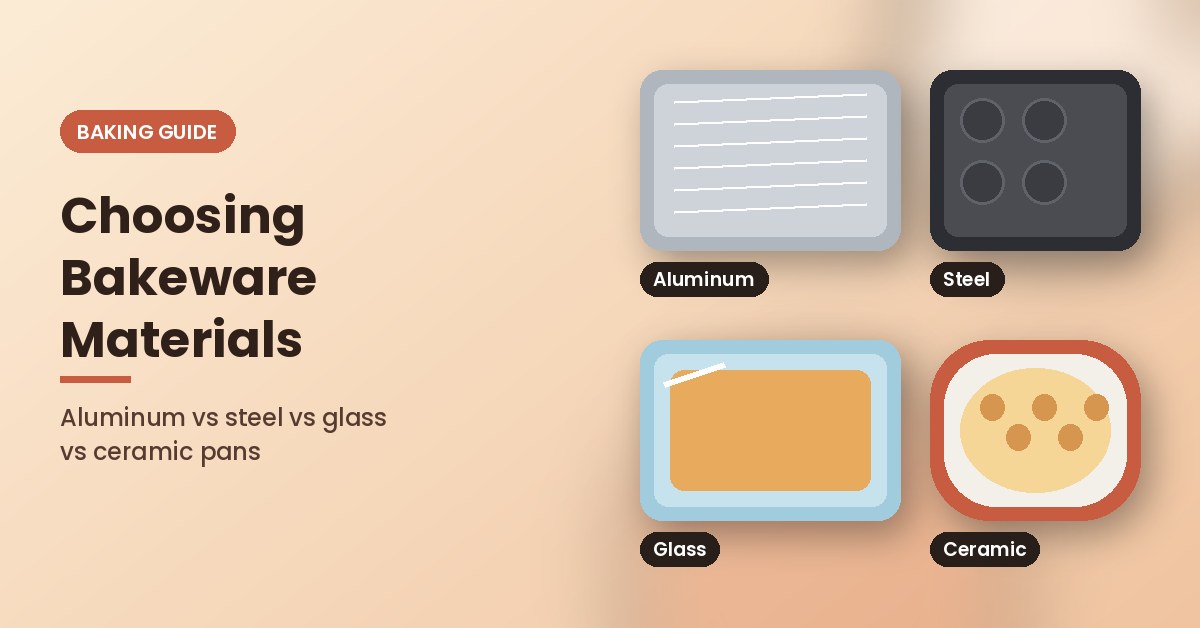
Two pans of the same brownie batter can come out of one oven looking like they were made by different people. One has crisp, chewy edges and a soft middle. The other is pale on top, dark and bitter underneath, and a little gummy in the centre. Same recipe, same rack, same timer. The only thing that changed was the pan.
That is why choosing bakeware materials deserves more thought than it usually gets. Most of us buy whatever is on sale or whatever matches the kitchen, then blame the recipe when things go sideways. In reality, aluminum, steel, glass and ceramic each move heat in their own way, and once you understand those differences you can pick the right pan for the job, or adjust when you only have the “wrong” one.
Why the pan matters as much as the recipe
An oven heats food in two main ways: hot air moving around it, and heat travelling through whatever the food is sitting in. The second part is where bakeware materials come in. Two properties do most of the work.
Conductivity: how fast heat travels
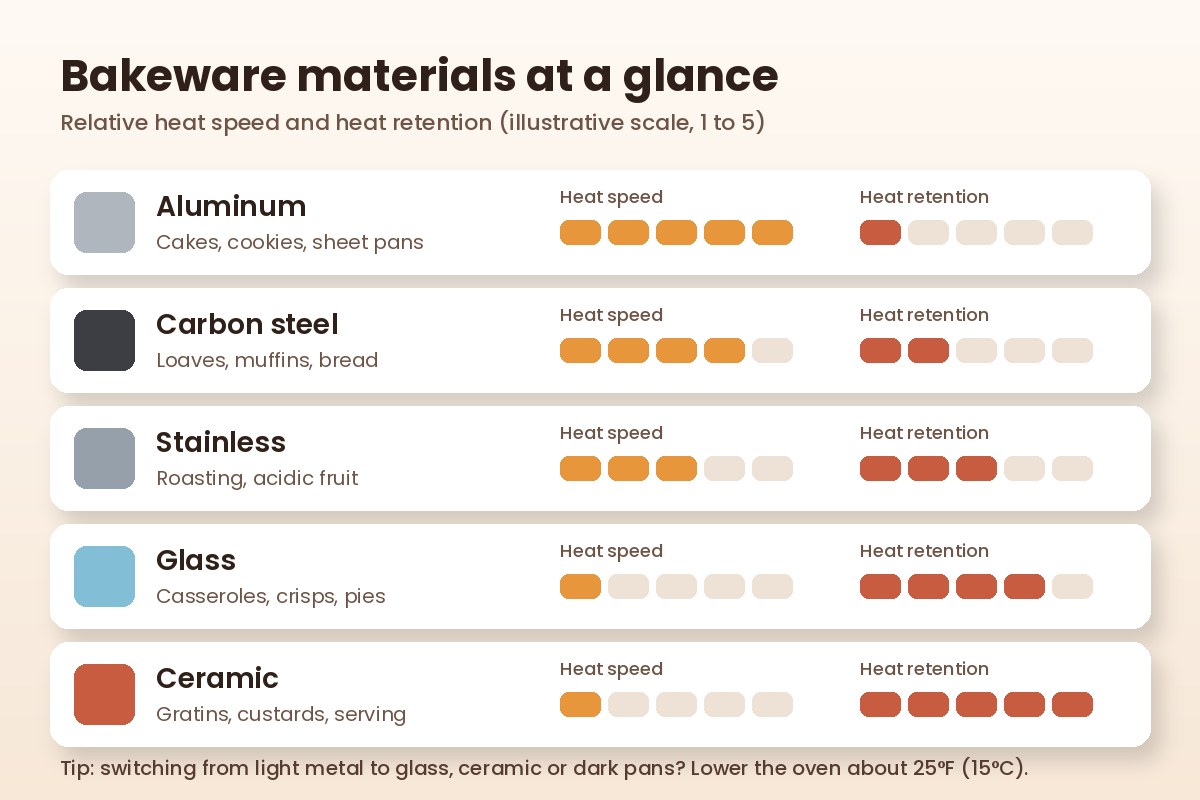
Conductivity is how quickly a material passes heat from the outside to the inside. Metals, aluminum in particular, are fast. Glass and ceramic are slow. A fast conductor responds quickly to the oven and gives you even browning across the bottom. A slow one takes a while to warm up, but once it is hot it stays hot.
Heat retention: how long it holds on
Glass and ceramic are heavy and dense, so they store a lot of heat. That is great for a casserole you want to keep warm on the table. It is less great for cookies, which keep baking on a hot dish long after they leave the oven. Thin metal sheds heat quickly, so baking stops close to when you pull the pan out.
Colour and finish also play a part. Dark, matte surfaces absorb more radiant heat and brown faster. Shiny, light surfaces reflect some of it back, which gives gentler, more even results. Keep both ideas in mind as we go through each material.
Aluminum pans: the quick, even all-rounder
If professional bakeries had to keep just one material, most would keep aluminum. It is light, it is affordable, and it conducts heat beautifully, so cakes rise evenly and cookies brown across the whole base instead of in hot spots.
Best for: layer cakes, sheet cakes, cookies, cupcakes, bread loaves, sheet-pan dinners and pretty much anything where you want a golden but not scorched bottom.
A few things to know before you stock up:
- Plain vs anodized. Plain aluminum can react with acidic ingredients like tomato, lemon or rhubarb, which may leave a metallic taste and dull grey marks on the pan. Anodized aluminum has a hardened oxide surface that resists this and holds up better to scratches.
- Thickness matters. Flimsy pans warp in a hot oven and pop loudly halfway through the bake. Look for heavy-gauge pans that feel solid in the hand.
- Hand wash it. Dishwasher detergent tends to oxidize bare aluminum and leave it chalky and dark.
Health Canada’s guidance on the safe use of cookware and bakeware is worth a read here. It suggests avoiding worn or pitted aluminum and not storing salty or acidic food in it for long periods, which lines up with how most experienced bakers already treat these pans.
Steel bakeware: carbon steel and stainless explained
“Steel” covers two quite different things in the bakeware aisle, and mixing them up causes a lot of confusion.
Carbon steel and aluminized steel
Many of the sturdy loaf pans, muffin tins and baking sheets on store shelves are carbon steel, often coated with a thin layer of aluminum (aluminized steel) or a nonstick finish. Steel is heavier than aluminum and conducts heat a bit more slowly, but it is tough, resists warping and lasts for years. Dark nonstick versions brown quickly, which is useful for crusty bread and pizza but can over-brown delicate cakes.
If your pans are dark, a common fix is to lower the oven temperature by about 25°F (around 15°C) and start checking a few minutes early.
Stainless steel
Stainless steel is the one that survives everything: metal utensils, dishwashers, acidic fruit fillings. On its own, though, it is a fairly poor conductor of heat and can bake unevenly. Better stainless bakeware gets around this with an aluminum core or a thick, layered base. It is a sensible pick for roasting pans and for people who want one tray that will never rust, but it is rarely the best choice for fine cakes.
Glass baking dishes: see-through, slow and steady
Glass is the material of family lasagnas and holiday crisps. It heats slowly, holds that heat for a long time, and lets you check the bottom crust without lifting anything out. It also doesn’t react with acidic food, so a lemon bar or tomato bake is perfectly happy in it.
Best for: casseroles, baked pasta, fruit crisps and cobblers, bread pudding, and pies where you want to watch the bottom crust colour.
Not ideal for: cakes that need a tender, pale crust, bar cookies with crisp edges, or anything that browns fast. Because glass keeps heating after the oven turns off, edges can turn hard and dry. Many bakers drop the temperature by 25°F when switching a metal-pan recipe to glass.
Thermal shock: the glass rule you can’t skip
Glass can crack or shatter when it goes through a sudden, large temperature change. Iowa State University’s extension service has a clear summary of glass kitchenware cautions, and the core habits are simple:
- Always let the oven finish preheating before the dish goes in.
- Never put a hot dish on a wet counter, a cold stovetop or in the sink.
- Don’t pour cold liquid into a hot glass dish.
- Keep glass away from the broiler and the stovetop burner.
- Retire any dish with chips, cracks or deep scratches.
Ceramic and stoneware: gentle heat, great presentation
Ceramic and stoneware behave much like glass, only more so. They are slow to heat and very good at holding warmth, which makes them lovely for dishes that go straight from oven to table. A ceramic gratin dish keeps potatoes bubbling for a good ten minutes after serving, and a stoneware pie plate gives a steady, even bake that is very forgiving.
Best for: gratins, baked custards and crème brûlée (usually in a water bath), quiches, pot pies, savoury bakes and deep-dish desserts you want to serve in the same vessel.
The trade-offs are weight, breakability and price. Ceramic is also sensitive to temperature swings, though usually a little less so than glass. If you are buying glazed pieces, stick with cookware made and sold for food use. Decorative pottery picked up on a trip abroad might not meet the same safety standards for glazes, so keep that for display.
A quick word on “ceramic nonstick”
Don’t confuse solid ceramic dishes with metal pans that have a ceramic-style nonstick coating. Those are aluminum or steel underneath and bake like metal pans. The coating just helps with release, and it lasts longer if you avoid metal utensils and harsh scrubbing.
Aluminum vs steel vs glass vs ceramic: side-by-side
| Material | Heats up | Holds heat | Reacts with acid | Best uses |
|---|---|---|---|---|
| Aluminum | Very fast | Low | Plain: yes. Anodized: minimal | Cakes, cookies, sheet pans |
| Carbon / aluminized steel | Fast | Low to medium | Coated: minimal | Loaf pans, muffins, bread, pizza |
| Stainless steel | Moderate (better with aluminum core) | Medium | No | Roasting, acidic fruit bakes |
| Glass | Slow | High | No | Casseroles, crisps, pies |
| Ceramic / stoneware | Slow | Very high | No (food-safe glaze) | Gratins, custards, oven-to-table dishes |
Matching the pan to what you’re baking
Rather than trying to crown one winner, think about what each bake needs.
- Layer cakes and cupcakes: light-coloured aluminum. You want even rise and a soft crust.
- Cookies: heavy aluminum sheets, ideally rimless or with low rims, lined with parchment.
- Yeast bread and sandwich loaves: aluminized steel or dark metal for a deeper crust.
- Brownies: metal for chewy edges; glass if you like a softer, fudgier slab (and lower the heat a little).
- Fruit pies, crisps and cobblers: glass or ceramic, which handle acidic fillings without reacting.
- Lasagna and casseroles: glass, ceramic or stoneware, especially if they are going straight to the table.
Seasonal fruit is where this really shows. A tart grape or plum filling will happily sit in glass or stoneware, while bare aluminum might leave it tasting faintly metallic. If you live near a fruit region, it’s worth reading up on what grows locally. Our guide to what grapes grow well in the Niagara wine region covers some of the cool-climate varieties that end up in Ontario markets each autumn.
Converting a recipe when you only have one type of pan
Most recipes in North America assume a light-coloured metal pan. If yours is different, a few small adjustments go a long way:
- Glass or ceramic instead of metal: lower the temperature by about 25°F and expect the bake to take a few extra minutes in the centre.
- Dark metal instead of light: lower by 25°F and check early; dark pans brown the base quickly.
- Thin, cheap pan: stack it on a second sheet pan to slow down the bottom heat.
- Insulated pan: expect paler bottoms and longer bake times; great for delicate cookies, frustrating for crisp ones.
The toothpick, the gentle press on the top of a cake, the colour of the edges: these matter more than the timer once you’ve changed pans.
Care habits that make any bakeware last
Good pans are not expensive compared with how many years they can last, as long as you treat them reasonably.
- Let metal pans cool before washing; plunging hot metal into cold water encourages warping.
- Skip steel wool on nonstick or anodized surfaces. A soak in warm soapy water usually loosens stuck bits.
- Dry carbon steel straight away to prevent rust spots.
- Store glass and ceramic so they aren’t knocking together; small chips are where cracks start.
A practical starter set
If you’re building a collection from scratch, you don’t need one of everything. Two heavy aluminum half-sheet pans, a pair of 9-inch round aluminum cake pans, an aluminized steel loaf pan and muffin tin, one 9×13-inch glass dish and a ceramic pie plate will cover the vast majority of home baking.
Choosing bakeware materials comes down to a simple question: does this recipe want fast, even heat, or slow, steady heat? Metal gives you the first, glass and ceramic give you the second. Once you start picking pans with that in mind, a lot of “mystery” baking problems quietly stop happening.