A cast iron skillet doesn’t come out of the box perfect. It gets there slowly, one fried egg, one skillet cornbread, one Sunday hash at a time. The black, slick surface on an old family pan isn’t some factory finish. It’s years of oil turned into a hard coating by heat, laid down in layers far thinner than a sheet of paper.
That coating is what people mean by seasoning. Once you know how to season a cast iron skillet, protect that coating and repair it when needed, the pan will outlast you. Neglect it and you’ll get sticky eggs, orange rust spots and the impression that cast iron is fussy. It isn’t. It just plays by a few rules that are different from your nonstick pans.
What seasoning actually is
Bare cast iron is grey, porous and quick to rust. When you spread a thin film of fat over it and heat it well past the oil’s smoke point, the oil doesn’t simply dry. It polymerizes: the molecules link up and bond to the metal, leaving a hard, slightly glossy layer that behaves more like a varnish than a grease.
Each round of oil and heat adds another coat. Stack enough of them and you get a surface that releases food easily, shrugs off water and darkens from bronze to deep black. That’s also why seasoning gets better with use. Every time you cook with a bit of fat, you’re adding a microscopic coat.
Two things follow from this. First, thin is everything. A thick layer of oil won’t harden properly; it turns gummy and tacky. Second, seasoning can wear away with acid, long soaks or aggressive scrubbing, but it can always be rebuilt.
Before you start: new, used or rusty?
How much work your skillet needs depends on where it’s starting from.
- New and pre-seasoned. Most skillets sold today already carry a factory coat. You can cook in them straight away. A couple of extra oven rounds will make the surface smoother, but it’s optional.
- Used but sound. A thrift-store or hand-me-down pan with a dull, patchy surface usually needs a good scrub and two or three oven sessions.
- Rusty or crusted. Flaky black buildup or orange rust means stripping back to clean metal first, then seasoning from scratch. More on that below.
How to season a cast iron skillet in the oven
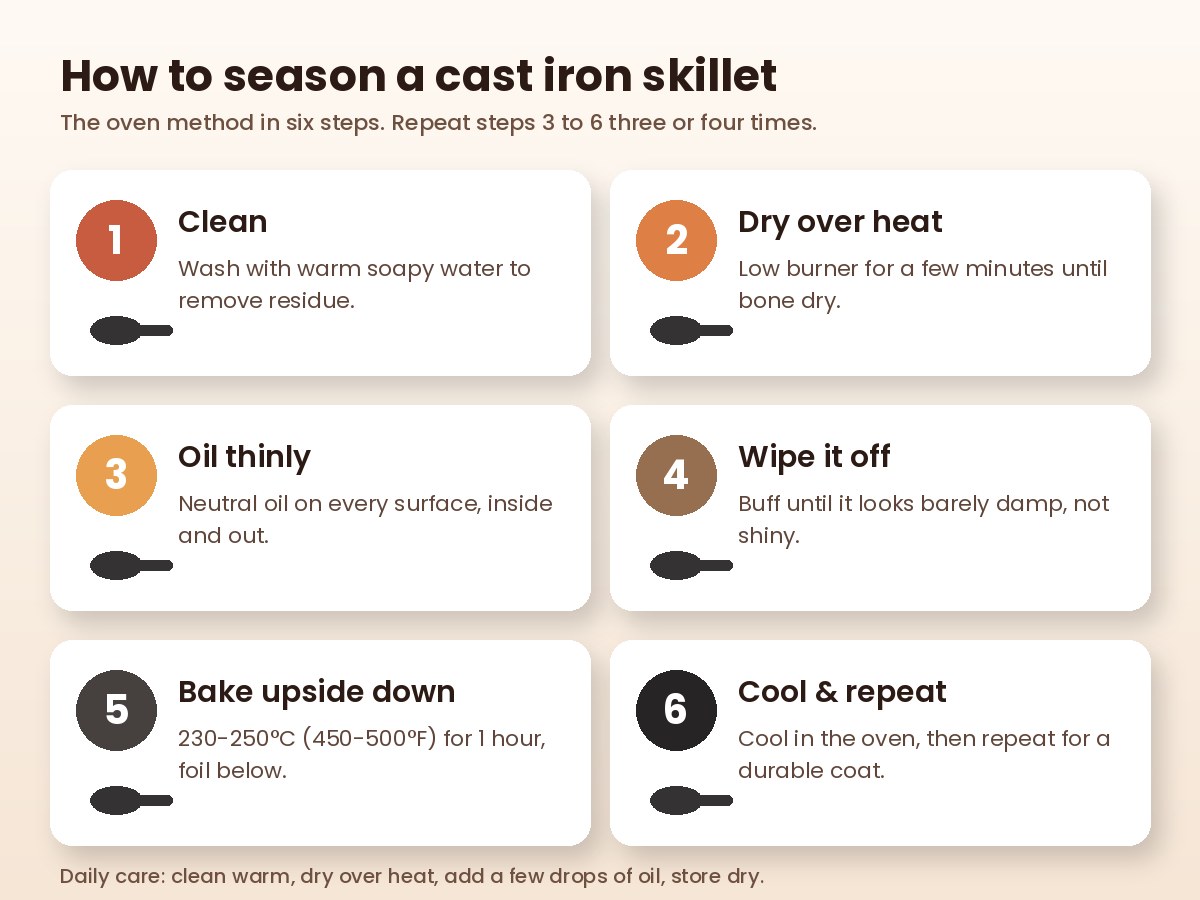
The oven method gives the most even result because it heats the whole pan, handle and underside included. Set aside about an hour and a half per round, most of it hands-off.
1. Clean it and dry it completely
Wash the skillet with warm water and a little dish soap to remove dust, old grease or residue. Yes, soap is fine at this stage. Then dry it with a towel and set it on a burner over low heat for a few minutes. Any moisture left in the pores will fight the oil, so make sure the pan is properly hot and dry before moving on.
2. Pick a sensible oil
You want a neutral oil with a fairly high smoke point. Vegetable oil, canola, sunflower and shortening all work well and are cheap. Flaxseed oil has a following because it can produce a very hard finish, but it’s expensive and some people find it flakes. Skip butter and unrefined olive oil for this job; their milk solids and lower smoke points leave a soft, uneven film.
3. Oil every surface, then wipe it almost all off
Pour in about a teaspoon, rub it over the inside, outside, rim and handle with a paper towel, and then take a clean towel and wipe as if you made a mistake and need to remove it. The pan should look barely damp, not shiny-wet. This step is where most seasoning goes wrong. Excess oil pools, turns sticky and leaves brown blotches.
4. Bake it upside down
Heat the oven to somewhere between 230°C and 250°C (about 450–500°F). Put a sheet of foil or a baking tray on the rack below to catch drips, then place the skillet upside down on the upper rack. Bake for one hour.
5. Let it cool in the oven
Switch the oven off and leave the pan inside until it’s cool enough to handle. Gradual cooling is gentler on the iron and lets the coating finish setting.
6. Repeat two or three times
One round gives you a start. Three or four rounds give you a durable base coat. If you’re restoring a stripped pan, don’t skip the repeats; bare iron needs that foundation before it’s ready for eggs.
Everyday cast iron skillet care
Building a good coat takes an afternoon. Keeping it is a two-minute habit after each meal.
Clean it while it’s still warm
Food lifts off far more easily from a warm pan. Scrape out leftovers with a wooden spatula or a pan scraper, then rinse under hot water and scrub with a brush or the rough side of a sponge. A small drop of mild dish soap won’t destroy a well-cured seasoning; modern detergents aren’t the lye-based soaps that gave cast iron its “never use soap” reputation. What you should avoid is harsh scouring, long soaks and the dishwasher.
For stuck-on bits, add a tablespoon of coarse salt and a splash of oil and scrub with a folded paper towel. The salt works as a gentle abrasive and rinses away cleanly. Stubborn residue usually loosens if you pour in a little water and bring it to a simmer for a minute.
Dry it on the stove, then oil lightly
Towel it off, then put the pan back on low heat until every trace of water has evaporated. While it’s still warm, rub in a few drops of oil and wipe away the excess. That thin coat protects the surface until the next use and slowly adds to the seasoning.
Store it dry and uncovered
Keep the skillet in a dry cupboard or on the stovetop. If you stack pans, lay a paper towel inside to protect the surface and absorb humidity. Avoid storing it with a tight lid on, which can trap moisture, and don’t leave leftovers sitting in it overnight.
Cooking habits that help (and a few that hurt)
The fastest way to improve seasoning is simply to cook in the pan often, especially with fat. Searing, shallow frying, roasting vegetables and baking cornbread all feed the surface.
A few habits make a real difference:
- Preheat gradually. Give the skillet five minutes over medium heat instead of blasting it on high. Iron heats unevenly at first, and a slow start reduces hot spots and the risk of warping.
- Go easy on acid early on. Tomato sauce, wine reductions and citrus can dull a young seasoning and pick up a metallic taste. A short simmer in a well-seasoned pan is fine; a three-hour ragu is better made in enamel or stainless.
- Don’t shock it. Pouring cold water into a ripping-hot skillet can crack it. Let it cool a bit first.
- Save delicate foods for later. Eggs and flaky fish stick to a new or freshly restored pan. Cook bacon, potatoes and burgers for a few weeks and those will come later without a fight.
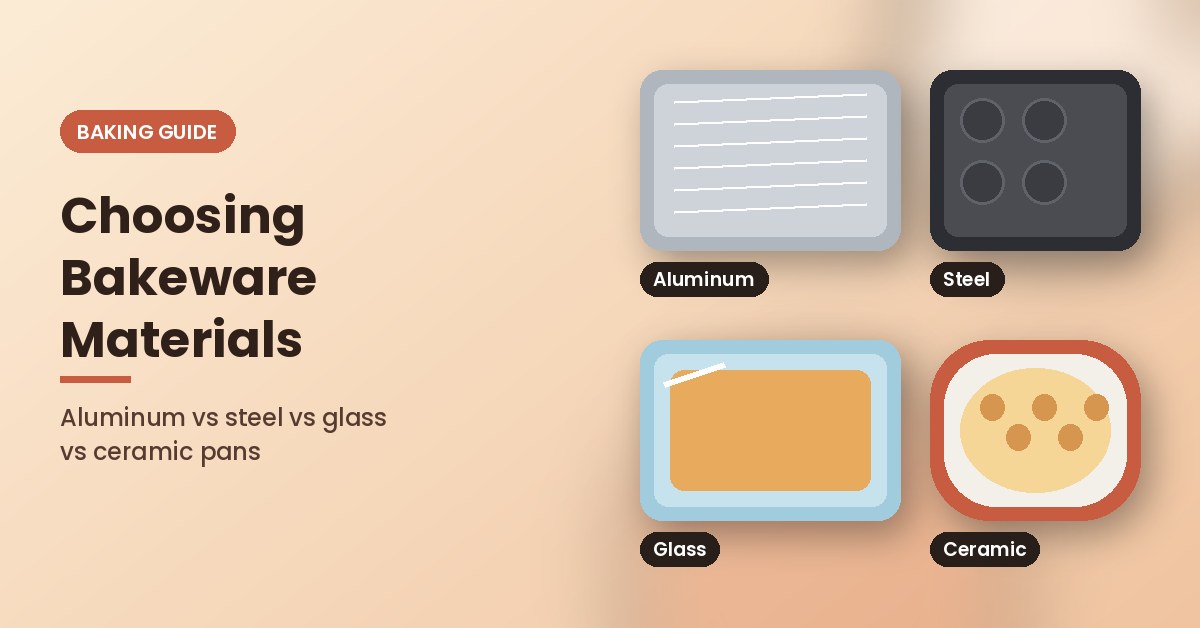
If you also bake in the same oven, it helps to know how cast iron compares with other pan materials. Cast iron heats slowly but holds heat for a long time, much like the heavier dishes we covered in our guide to choosing bakeware materials: aluminum vs steel vs glass vs ceramic. That’s why it makes such crisp-edged cornbread and pan pizza.
Fixing common seasoning problems
The surface feels sticky or tacky
Too much oil, too little heat, or both. Put the skillet in a 230°C oven, upside down, for another hour. That usually finishes curing the soft layer. If it’s still gummy, scrub it back with salt and hot water and do one more thin round.
Black flakes are coming off
Small flakes often aren’t seasoning at all, but carbonized food. If the coating itself is peeling, it was probably applied too thick at some point. Scrub away the loose patches, then rebuild with a couple of thin oven coats. The flakes aren’t harmful, just annoying.
Orange rust spots
Rust looks dramatic but is rarely fatal. Scrub the spots with steel wool or a stiff brush and a bit of water until you reach clean grey metal. Wash, dry completely over heat, then season the whole pan in the oven once or twice. For a pan that’s rusted all over, a soak of equal parts white vinegar and water can help loosen it, but check every 15–20 minutes and never leave it longer than an hour or so; vinegar attacks bare iron too.
Food keeps sticking
Most often, the pan wasn’t hot enough or there wasn’t enough fat. Preheat a little longer, add oil once the pan is warm, and let food sear before you try to move it. Meat that sticks will often release on its own once it’s browned.
When a full strip-down makes sense
If a skillet has thick, uneven crud on the outside, heavy rust or a seasoning that keeps flaking no matter what, starting over is easier than patching. The simplest home approach is an oven self-clean cycle, which burns everything back to bare metal, though it runs extremely hot and some cooks worry about stressing older or thinner pans. A lye-based oven cleaner sealed in a bag for a day or two is slower but gentler; wear gloves and eye protection and rinse thoroughly. Either way, the pan will rust within minutes once it’s bare, so dry it on the stove immediately and start the seasoning steps above.
Quick reference
- Season with thin coats of neutral oil at 230–250°C for an hour, three or four times.
- Clean while warm, dry over heat, oil lightly.
- No dishwasher, no long soaks, no storing food in the pan.
- Rust and stickiness are fixable. Scrub, dry and re-season.
- Cook in it often. Use is the best maintenance there is.
Manufacturers and food-safety educators largely agree on these basics. If you’d like to compare notes, Lodge’s cast iron cleaning and care guide and the University of Maine Cooperative Extension’s cast iron basics are both worth a read.
Treat it as a routine rather than a chore. Wipe, heat, a few drops of oil, and back on the stove. Do that for a few months and you’ll have a skillet that sears like a restaurant pan, releases cornbread in one piece and looks better every year.