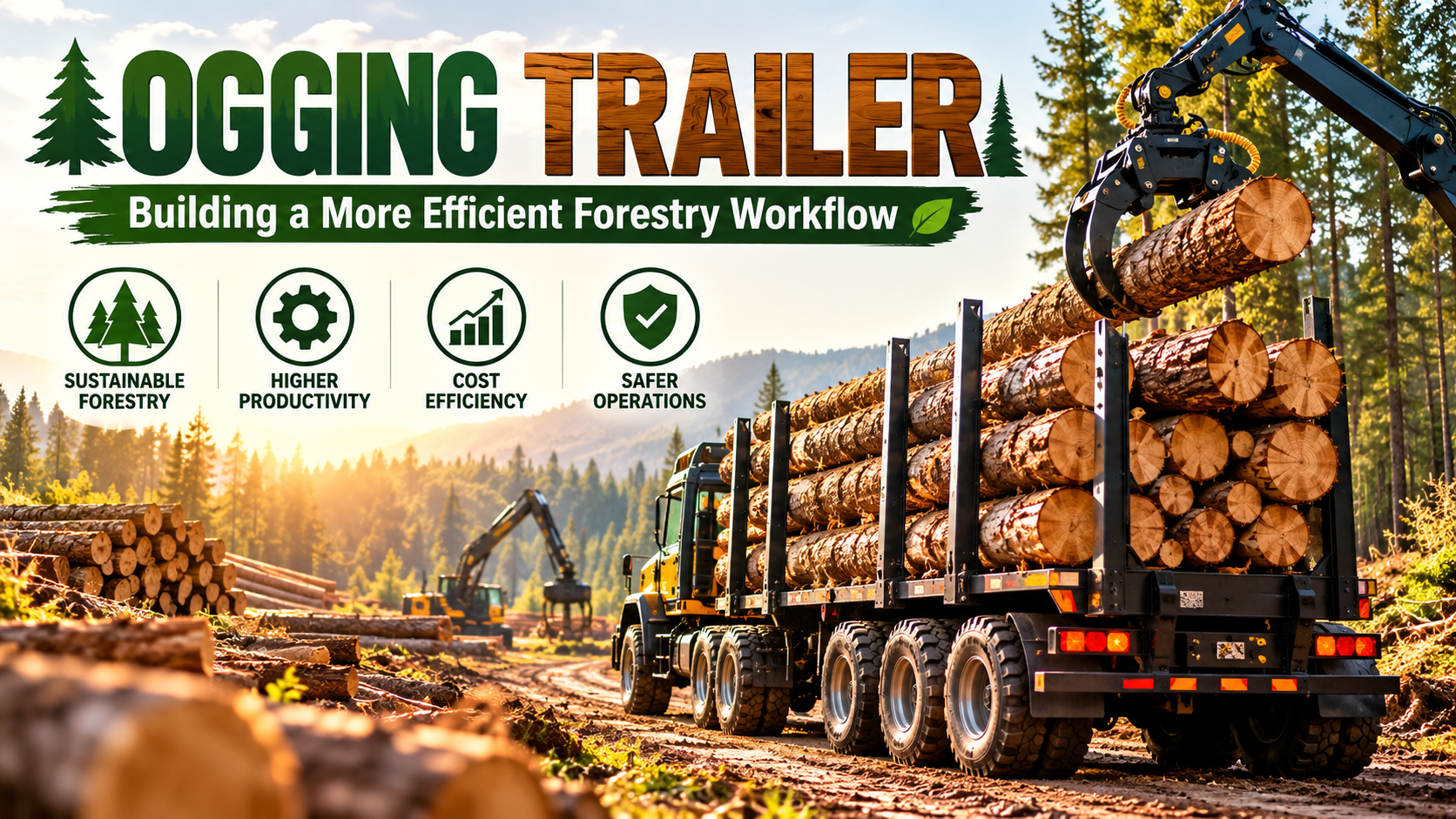
A dependable logging trailer can influence nearly every stage of a small or medium timber operation. Harvested logs need to move from cutting locations to landings, storage areas, processing sites, or other accessible points. Equipment designed specifically for this task can reduce unnecessary handling and help crews maintain an orderly workflow.
Timber Movement Is Part of Production
It is easy to focus primarily on cutting and processing, but transportation between those stages matters just as much.
Logs left scattered around a woodlot require repeated collection. A logging trailer allows operators to establish a more structured movement system.
Timber can be gathered, loaded, transported, and unloaded according to a planned sequence instead of being moved several times unnecessarily.
Design the Route Before Starting
Efficient hauling begins with route planning.
Inspect trails for tight turns, steep sections, soft ground, low branches, stumps, and other obstacles. Determine whether loaded equipment can travel through safely before beginning collection.
A logging trailer should be operated according to actual ground conditions rather than assumptions based on unloaded travel.
Create Practical Collection Areas
When possible, bring felled timber into accessible collection points. This reduces the amount of maneuvering required during loading.
A clearly organized collection area also helps operators separate timber by length, diameter, or intended use.
Load With Balance in Mind
Loading speed should never replace proper load placement.
Logs need to sit securely while weight remains appropriately distributed. Poor placement can affect trailer behavior and make transportation less predictable.
Operators using a logging trailer should adjust the load as necessary during loading rather than attempting to correct an unstable arrangement afterward.
Adapt to Seasonal Conditions
Woodland terrain changes dramatically throughout the year.
Rain can turn firm tracks into mud. Snow may hide obstacles and reduce traction. Freeze-thaw cycles can create ruts or uneven ground.
A logging trailer that regularly operates in changing conditions should receive inspections appropriate to the season.
Those looking for local forestry equipment guidance can consider terrain, seasonal use, and typical log dimensions when discussing equipment needs.
Protect the Ground Where Possible
Careful route selection can help limit unnecessary soil disturbance.
Avoid repeated travel over particularly soft areas when practical. Planning collection routes before heavy movement begins can reduce both delays and ground damage.
Make Inspections Routine
A short inspection before operation can prevent larger disruptions later.
Check tires, structural components, towing connections, load restraints, and moving parts. If the logging trailer includes hydraulic handling equipment, inspect hoses, fittings, and controls as well.
Pay attention to anything that has changed since the previous working day.
Improve Operator Efficiency
Experience improves productivity, but consistency matters too.
Develop a standard sequence for positioning, loading, securing, transporting, and unloading. Repeating an efficient routine reduces unnecessary decisions during each cycle.
Keep the Work Area Controlled
Only necessary personnel should remain near active loading operations. Clear communication is essential when more than one person is involved.
Nobody should enter areas where timber could swing, roll, or fall.
Consider the Entire Operation
Equipment should complement the scale of the woodlot.
A logging trailer that is too large for available trails may create maneuverability problems. Equipment with insufficient capacity may require excessive trips.
The most practical configuration balances payload, access, handling capability, towing requirements, and expected production.
Conclusion
A logging trailer can become a central part of an efficient forestry workflow when it is matched carefully to terrain and timber requirements. Route planning, balanced loading, seasonal awareness, preventive inspections, and disciplined operating practices all contribute to dependable performance. By treating transportation as an integrated stage of production, forestry operators can move timber more efficiently from harvest to its next destination.