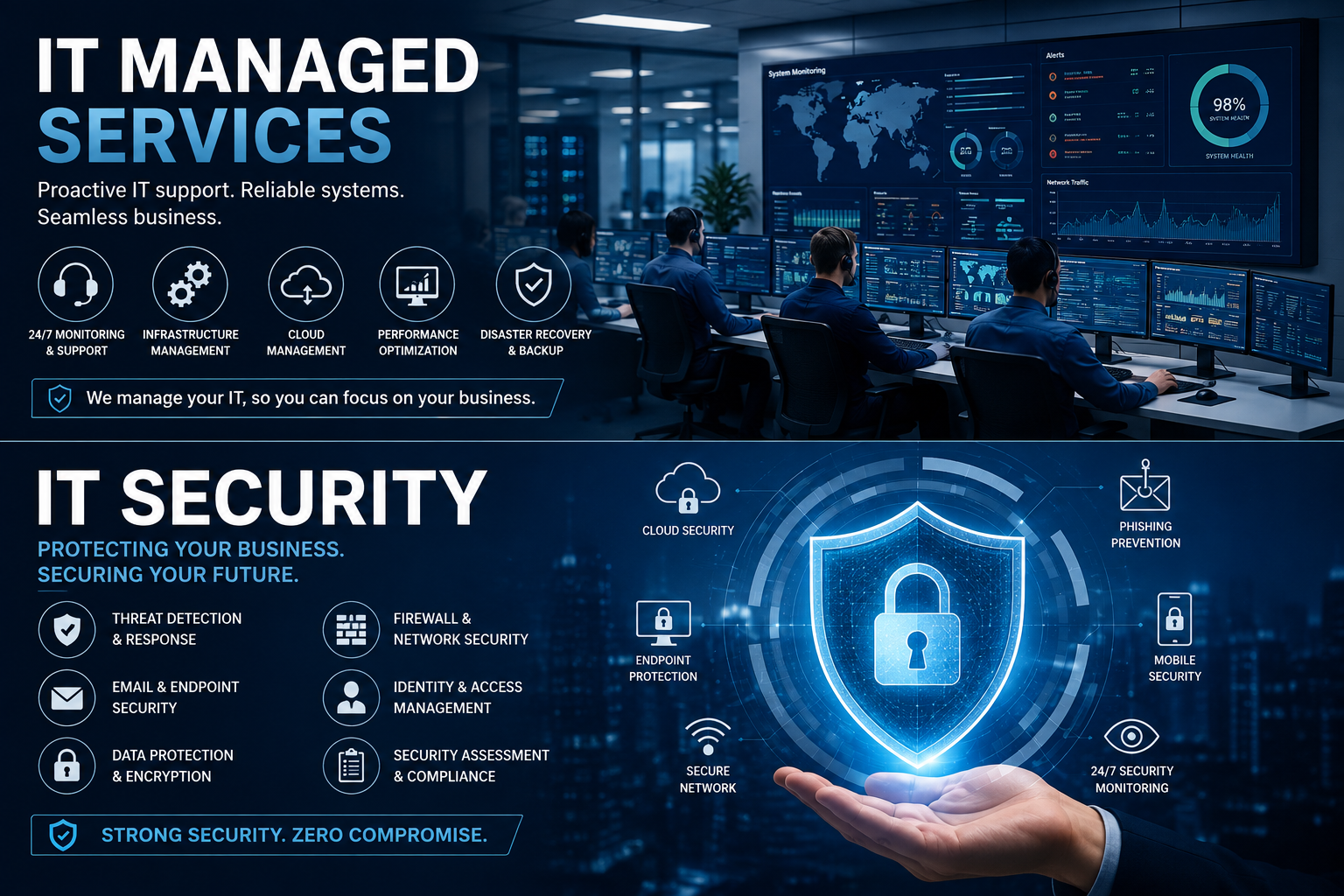
Businesses depend on technology, but not every organization wants to build a large internal technical team. Recruiting specialized employees, maintaining broad expertise, and covering changing support requirements can become difficult as technology environments expand.
IT outsourcing allows organizations to assign selected technology responsibilities to external specialists while retaining internal control over business priorities. The approach can cover individual functions or a broader range of ongoing IT activities.
Why Organizations Consider IT Outsourcing
The reasons vary considerably. Some businesses need expertise that is difficult to maintain internally. Others want additional capacity during periods of growth or technology change.
Outsourcing can also provide a clearer structure for recurring responsibilities.
Instead of relying on individual employees to handle technical tasks alongside unrelated duties, organizations can define ownership for maintenance, support, monitoring, and other activities.
Determine What Should Remain Internal
IT outsourcing does not require transferring every technology responsibility outside the organization.
Businesses should identify which functions are strategically important to maintain internally and which can be supported externally.
For example, internal leaders may retain responsibility for technology priorities and business decisions while external resources handle specialized technical activities.
Clear boundaries help prevent confusion.
Establish Responsibilities Early
Successful outsourcing depends on clearly defined expectations. Businesses should understand who handles specific tasks, how issues are escalated, and which decisions require internal approval.
Documentation is essential here.
Responsibilities for user support, system maintenance, security tasks, backups, and technology changes should be understood by everyone involved.
Maintain Strong Communication
Technology decisions can affect employees throughout an organization. Communication therefore needs to extend beyond technical teams.
Planned changes should be explained when they may alter workflows or availability. Significant incidents should also have established communication procedures.
Regular discussions can keep outsourced activities aligned with changing business requirements.
Protect Access and Business Information
External technical involvement may require access to systems or sensitive information. Businesses should maintain appropriate controls regardless of who performs the work.
Permissions should follow operational requirements rather than convenience. Accounts should be individually assigned where practical and reviewed regularly.
IT outsourcing arrangements should also consider how access is granted, recorded, modified, and removed.
Keep Internal Visibility
Outsourcing responsibility does not mean giving up oversight. Decision-makers should still understand their technology environment and major operational risks.
Useful documentation may include system inventories, access information, backup procedures, recurring maintenance activities, and significant changes.
This visibility supports informed decisions and reduces dependence on undocumented knowledge.
Use Outsourcing to Access Specialized Skills
Modern IT environments can involve networking, security, cloud systems, data protection, applications, and device management. Maintaining deep internal knowledge across every area can be challenging.
External expertise can supplement internal capabilities when specialized knowledge is required.
This approach can be especially useful for projects, migrations, assessments, or periods of rapid change.
Review Performance Over Time
Business requirements evolve, so outsourcing arrangements should not remain static indefinitely.
Organizations can periodically review support patterns, recurring incidents, security concerns, employee feedback, and upcoming technology priorities.
These discussions help identify where processes need adjustment.
Plan for Business Continuity
Organizations should understand what happens when important technology becomes unavailable.
Backup and recovery procedures need clear ownership, while escalation contacts should be documented.
Preparation becomes particularly important when responsibilities are distributed across internal and external teams. Everyone should know their role before an incident occurs.
Conclusion
IT outsourcing offers businesses a flexible way to access technical expertise and operational support without necessarily maintaining every capability internally.
Its effectiveness depends on structure. Organizations need clear responsibilities, appropriate access controls, good communication, useful documentation, and continuing oversight.
When these foundations are established, IT outsourcing can complement internal capabilities while helping businesses maintain reliable technology. Rather than viewing outsourcing simply as transferring tasks elsewhere, organizations can treat it as a coordinated extension of their broader technology strategy.